
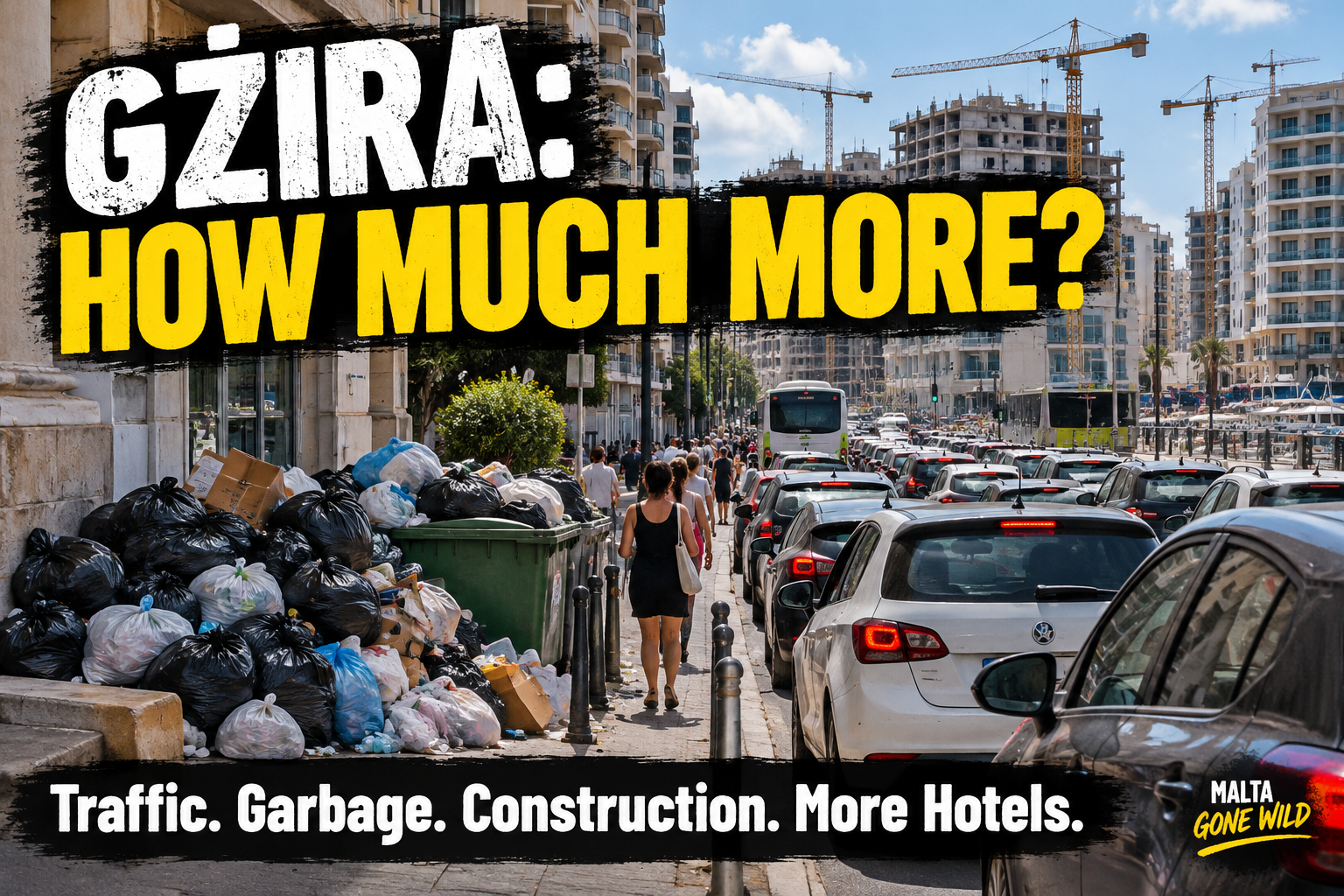

FAA has joined Gżira residents in opposing two more hotel developments — while official figures already show that tourism adds thousands more people to one of Malta’s most densely populated localities.
Two more proposed hotels. Another 151 rooms. A town already struggling with pressure.
Gżira residents have once again raised the alarm over overdevelopment, this time backed by Flimkien għal Ambjent Aħjar (FAA), as two new hotel proposals threaten to add even more pressure to an already saturated area.
The issue is not simply whether another project can be squeezed in. The real question is whether Gżira can cope with the cumulative impact of tourism, traffic, waste, noise, construction and loss of residential quality of life.
12,343 Residents — But 16,005 People in August
According to official figures from the National Statistics Office, Gżira had an estimated resident population of 12,343 in 2024.
During August 2024, tourism added an estimated 3,662 people to the locality, bringing Gżira’s effective population to around 16,005.
That means tourism increased the number of people present in Gżira by almost 30%.
| Category | Figure |
|---|---|
| Residents (2024) | 12,343 |
| Additional tourists in August 2024 | 3,662 |
| Effective population in August 2024 | 16,005 |
| Increase caused by tourism | +29.7% |
Graph 1: Gżira’s Population Pressure
Residents vs additional tourist presence in August 2024
Residents — 12,343
Additional tourists — 3,662
Total effective population — 16,005
Source: NSO Tourism Intensity 2024. Tourist figure refers to estimated tourist presence in August 2024.
Tourism Also Increases Population Density
The density figures are equally striking.
In August 2024, Gżira’s resident density stood at approximately 12,696 people per square kilometre. Once tourists were included, that rose to 16,463 people per square kilometre.
| Measure | People per km² |
|---|---|
| Residents only | 12,696 |
| Residents + tourists | 16,463 |
| Increase | +3,767 |
What About Tourist Accommodation?
This is where the public debate becomes even more important.
FAA has pointed out that Gżira already has a significant concentration of hotels. But hotels are only part of the tourism footprint. Guesthouses, hostels, aparthotels and licensed holiday apartments also place pressure on roads, waste collection, utilities and public space.
To properly assess the impact, the authorities should publish a clear locality-based breakdown showing:
- how many hotels are already licensed in Gżira
- how many guesthouses and hostels are operating
- how many short-let apartments are registered
- how many tourist beds already exist in total
- how many additional rooms are proposed or approved
Without that full picture, residents are being asked to accept more development without being shown the real cumulative burden.
Two More Hotels Proposed Near Grands Suites
The current protest focuses on two hotel applications close to the existing Grands Suites development.
| Application | Proposal | Rooms |
|---|---|---|
| PA/06312/26 | Proposed hotel at Triq ir-Rebħa | 78 |
| PA/06147/26 | Proposed hotel at Triq l-Empire Stadium | 73 |
| Total additional proposed rooms | 151 | |
Graph 2: Proposed Hotel Expansion
PA/06312/26 — 78 rooms
PA/06147/26 — 73 rooms
Total — 151 rooms
Why This Matters
More hotel rooms do not just mean more tourists sleeping in the area.
They also mean more traffic, more taxis, more deliveries, more refuse, more pressure on utilities, more noise and more strain on already busy streets and pavements.
Residents are entitled to ask whether infrastructure is keeping pace with this growth — or whether Gżira is simply being expected to absorb more and more without any real limit.
The question is no longer whether another project fits on paper. The real question is how much more Gżira can actually take.
Malta Gone Wild Asks: Where Is the Limit?
Gżira is not an abstract development zone. It is a town where people live, work and try to maintain a decent quality of life.
Official figures already show that tourism significantly increases the number of people present in the locality. Now more hotel rooms are being proposed, while residents continue to deal with traffic, garbage, noise and constant development pressure.
Before approving further tourism projects, the authorities should publish the full accommodation picture and explain clearly how the cumulative impact on residents will be managed.
Because if the answer is always “more”, then what exactly is the limit?
Sources
- NSO – Tourism Intensity 2024
- Times of Malta – coverage of FAA and Gżira residents’ protest
- Planning application references PA/06312/26 and PA/06147/26