
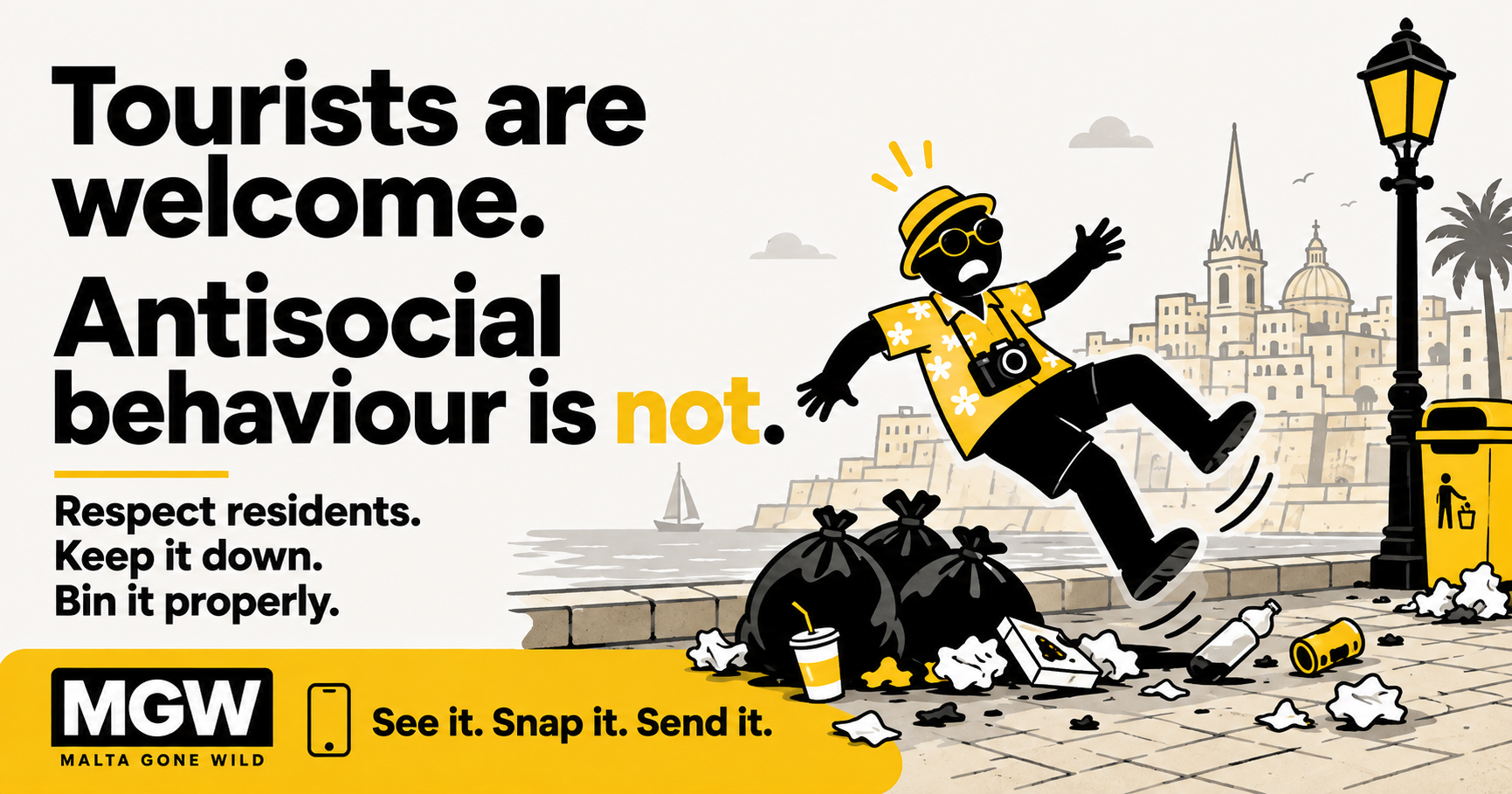

Tourism is vital to Malta. Nobody seriously disputes that.
But somewhere along the way, “tourism is important” appears to have become an excuse for residents to tolerate almost anything.
Rubbish dumped outside on the wrong days. Large groups shouting through residential streets at night. Short-lets operating next door to families trying to sleep. Party boats spilling hundreds of people into already congested areas. Pavements blocked by waste. Police resources repeatedly being used to deal with behaviour connected to the entertainment and tourism industry.
And when residents complain?
Too often, they are passed from one authority to another. Malta is hardly the only Mediterranean destination struggling with overtourism and antisocial behaviour. The difference is that some destinations have stopped pretending there isn’t a problem.
Dubrovnik: Tourism Must Respect the City
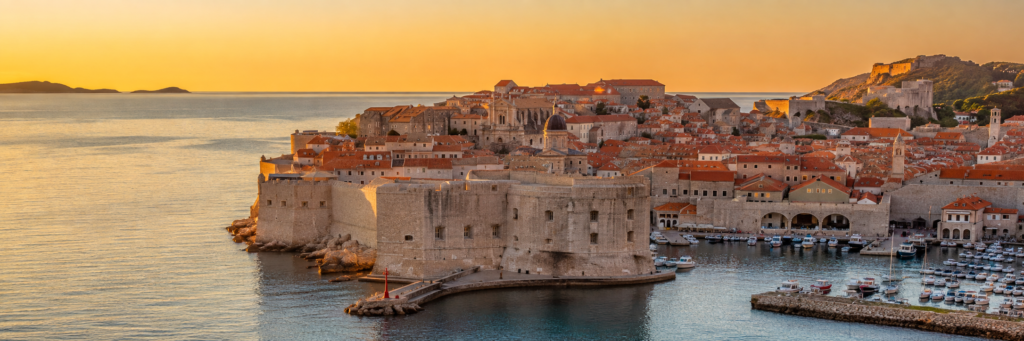
Dubrovnik should be particularly interesting to Malta.
It is beautiful, small, historic, densely visited and heavily dependent on tourism. It also reached a point where authorities recognised that simply increasing visitor numbers was not sustainable.
The response was remarkably straightforward.
They called it “Respect the City.”
Launched in 2017, the programme was designed specifically to tackle the negative effects of overtourism. Dubrovnik now uses visitor monitoring, technology and crowd-management measures to control pressure on the city rather than allowing unlimited tourism growth to dictate how residents live.
The philosophy behind the programme matters as much as the measures themselves. The objective is not simply to keep tourists happy.
It is to ensure that tourism remains compatible with life for the people who actually live there.
That should not be a revolutionary idea. Yet in Malta it sometimes feels like one.
Residents should not have to accept sleepless nights because an apartment next door became holiday accommodation. They should not have to navigate around bags of rubbish because visitors or accommodation operators cannot follow collection schedules.
They should not have to repeatedly photograph the same offences, email multiple authorities and chase complaints simply to get a basic residential problem addressed.
Tourism should operate within a community, not take it over. Dubrovnik understood that.
Mallorca and Ibiza: The Balearic Islands Went Further
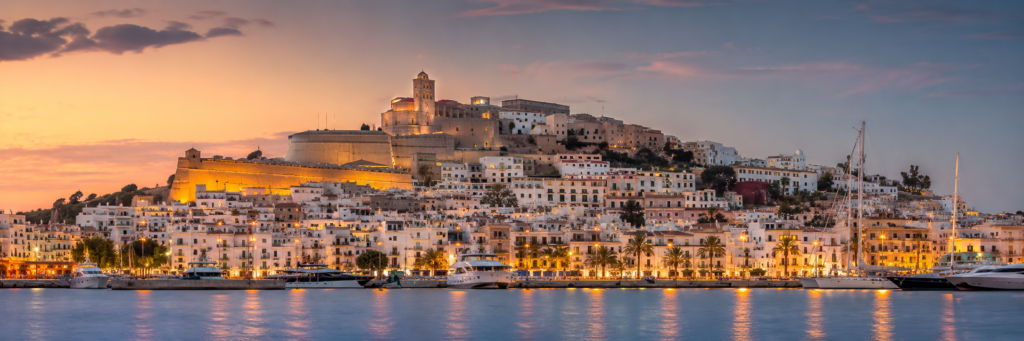
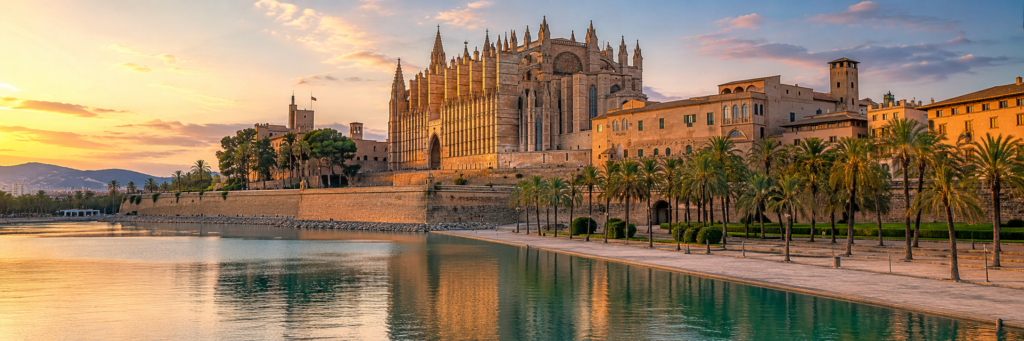
The Balearic Islands are the Spanish Mediterranean islands that include Mallorca, Ibiza, Menorca and Formentera. For Malta, Mallorca and Ibiza are particularly relevant because they face many of the same pressures: mass tourism, nightlife, short-term accommodation and complaints about antisocial behaviour.
They know party tourism very well. They also know what happens when cheap alcohol, huge groups and concentrated tourist accommodation begin affecting entire neighbourhoods.
Their response was not another poster asking everyone to please behave.
They legislated: Under the Balearic Islands’ Responsible Tourism rules, drinking alcohol in public is prohibited in specifically designated problem tourism zones, except in authorised places such as licensed terraces.
The penalty?
€500 to €1,500.
The measures apply to identified areas in places including Palma and parts of Mallorca and Ibiza where tourism-related disorder has become a persistent problem.
The Balearic authorities have also directed significant resources towards inspection, security and responsible-tourism measures in the affected areas.
Even party boats have been targeted by specific restrictions in designated tourism zones.
Think about that for a moment. Another Mediterranean tourism destination looked at the impact certain forms of tourism were having on residents and said:
Enough.
Not enough tourism. Enough bad behaviour. There is a very big difference.
Our Community Police Are Helping, But They Shouldn’t Have to Carry This Burden Alone
Community Police officers have been helping residents and responding to concerns on the ground. Their presence matters. Visible policing can make people feel safer, discourage antisocial behaviour and show residents that their complaints are being heard.
That work deserves recognition. But the bigger question is why our police should repeatedly have to pick up the consequences of failures elsewhere.
If the same streets are suffering from recurring short-let disturbances, groups shouting late at night, waste offences and tourism-related disorder, then policing alone cannot be the long-term solution.
Police resources are finite. Every officer dealing with a preventable tourism-related disturbance is an officer who could potentially be dealing with another matter elsewhere.
And it should never have reached a stage where Malta is discussing, considering or feeling the need for military assistance to maintain order in areas overwhelmed by antisocial behaviour.
The Armed Forces are not a substitute for proper tourism management, effective enforcement, responsible short-let operation and functioning local regulation.
If a tourism model requires ever-increasing security resources simply to keep residential streets liveable, then the problem is not a shortage of uniforms.
The problem is the model.
Malta Does Not Need to Become Anti-Tourist
Calling for better enforcement is often portrayed as being hostile towards tourists.
It isn’t. The overwhelming majority of visitors come to Malta, enjoy themselves, spend money, respect the country and leave without causing anybody a problem.
Those tourists have absolutely nothing to fear from stronger rules. In fact, they benefit from them too.
Nobody books a holiday hoping to walk through streets covered in rubbish, listen to screaming groups at 3am or watch drunken fights outside their accommodation.
Responsible tourism protects good tourists as much as it protects residents.
What it challenges is the idea that because someone is spending money on holiday, the surrounding community should tolerate behaviour that would never be considered acceptable from its own residents.
Imagine a “Respect Malta” Policy
- Malta could learn a great deal from both Dubrovnik and places such as Mallorca and Ibiza:
- Identify persistent tourism-pressure zones.
- Publish clear rules.
- Tell visitors what is expected before they even arrive.
- Make short-let operators responsible for informing their guests.
- Put visible warnings in accommodation.
- Target enforcement where repeated problems actually occur.
- Fine people who repeatedly ignore the rules.
- Publish enforcement figures so residents can see whether anything is actually being done.
- Give Community Police the support of a wider system that prevents problems instead of repeatedly asking them to deal with the aftermath.
- And where particular forms of tourism consistently generate disproportionate public disorder, waste or noise, regulate them accordingly.
This is not radical. Other tourism-dependent Mediterranean destinations are already doing it.
Residents Are Not an Inconvenience to the Tourism Industry
Malta rightly spends enormous effort promoting itself abroad. Perhaps it is time to put the same effort into protecting the communities tourists are being invited into.
Because there is a point at which tourism stops improving a destination and begins degrading the quality of life that made the destination attractive in the first place.
Dubrovnik recognised it.
Mallorca and Ibiza recognised it.
Malta needs to recognise it too.
Tourists are welcome. Rubbish, intimidation, sleepless nights and antisocial behaviour are not.
Our Community Police should be supported, not left to continually manage the symptoms of a much larger problem.
And residents should never have to reach the point of asking why extraordinary security measures are needed simply so they can enjoy peace in their own neighbourhoods.
A country can welcome millions of visitors without asking its own residents to surrender their streets.
That is not anti-tourism.
That is responsible tourism.